Video games have become an integral part of modern entertainment, captivating millions of players across the globe. Behind the vibrant graphics, immersive storytelling, and engaging gameplay lies a complex framework of mathematical concepts that contribute to the functionality and read more about math enjoyment of these virtual experiences. This report delves into the various mathematical principles that underpin video game development, exploring their applications in graphics, physics, AI, and game design.
1. Geometry and Graphics
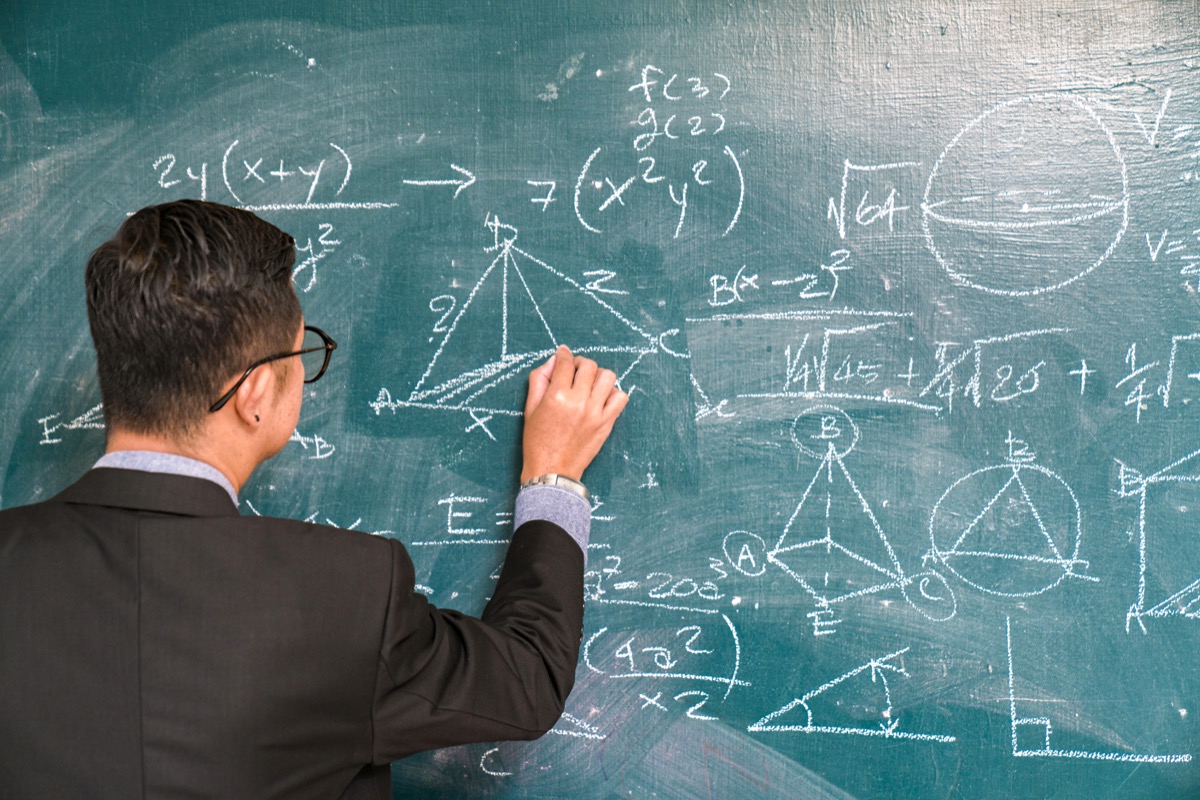
One of the most visible applications of mathematics in video games is in the realm of graphics, particularly through the use of geometry. The visual representation of characters, environments, and objects relies heavily on geometric principles.
1.1 3D Modeling
3D models are constructed using vertices, edges, and faces. The fundamental building blocks of 3D geometry are polygons, primarily triangles, due to their simplicity and ability to form complex surfaces when combined. The process of rendering these models onto a 2D screen involves transformations such as translation, rotation, and scaling, which are mathematically represented using matrices.
For instance, a point in 3D space can be represented as a vector (x, y, z). To rotate this point around the origin, a rotation matrix is applied. The mathematics of linear algebra becomes crucial here, as it allows for efficient calculations of these transformations. The use of homogeneous coordinates extends the dimensionality of these transformations, enabling translations to be incorporated into matrix operations.
1.2 Lighting and Shading
Another critical aspect of graphics is lighting and shading, which enhances the realism of 3D environments. The mathematics of light behavior is modeled using various equations. For example, the Phong reflection model uses vectors to represent the light source, the viewer’s position, and the surface normal. The intensity of light reflected off a surface can be calculated using the dot product of these vectors, incorporating ambient, diffuse, and specular components.
2. Physics Simulations
Physics engines in video games simulate real-world physical interactions, such as collision detection and response, gravity, and friction. These simulations rely on mathematical equations derived from classical mechanics.
2.1 Kinematics
Kinematics, the study of motion, is essential for creating realistic movement in games. The equations of motion, such as \(s = ut + \frac12at^2\) (where \(s\) is displacement, \(u\) is initial velocity, \(a\) is acceleration, and \(t\) is time), allow developers to calculate the position of objects over time.
2.2 Collision Detection
Collision detection is a critical component of gameplay mechanics. It determines when two objects intersect and how they should respond. Various algorithms, such as Axis-Aligned Bounding Box (AABB) and Sphere Collision, utilize geometric calculations to detect overlaps between objects. For more complex shapes, techniques like the Separating Axis Theorem (SAT) are used, which involve vector mathematics to find potential intersections.
2.3 Physics Engines
Physics engines, such as Havok and Box2D, implement algorithms that simulate real-world physics using numerical methods. These engines often employ differential equations to model the motion of objects under various forces, integrating these equations over time to predict future states.
3. Artificial Intelligence
Artificial intelligence (AI) in video games enhances the behavior of non-player characters (NPCs) and creates dynamic environments. Mathematics plays a crucial role in decision-making algorithms and pathfinding.
3.1 Decision Trees and Finite State Machines
AI often uses decision trees or finite state machines (FSMs) to dictate character behavior. These structures can be represented mathematically, with nodes representing states and edges representing transitions based on conditions. The complexity of these trees can be managed using algorithms that optimize the decision-making process.
3.2 Pathfinding Algorithms
Pathfinding is a critical aspect of AI, enabling characters to navigate through game environments. The A* (A-star) algorithm is one of the most popular pathfinding algorithms, combining elements of Dijkstra’s algorithm and heuristic search. The algorithm uses a cost function that incorporates both the distance from the start node and the estimated distance to the goal, allowing for efficient route planning.
4. Game Design and Balancing
Mathematics is also essential in game design, particularly in balancing gameplay mechanics and ensuring player engagement.
4.1 Probability and Randomness
Many games incorporate elements of chance, such as loot drops, critical hits, and random events. Probability theory is used to calculate the likelihood of these events occurring. For example, if a game has a 10% chance of a critical hit, the expected value can be used to determine the average damage output over time, helping developers balance the gameplay experience.
4.2 Game Theory
Game theory, the study of strategic interactions among rational decision-makers, can be applied to multiplayer games. Concepts such as Nash equilibrium help developers understand player behavior and design mechanics that promote fair competition and cooperation. The analysis of strategies and payoffs can inform decisions about resource allocation, character abilities, and economic systems within the game.
5. Sound Design and Audio Programming
Mathematics is not limited to visual aspects; it also extends to sound design and audio programming in video games. The generation and manipulation of sound waves rely on mathematical functions.
5.1 Waveforms and Frequencies
Sound waves can be represented mathematically as sine waves, where frequency determines pitch and amplitude determines volume. The synthesis of sounds often involves combining multiple waveforms using principles of Fourier analysis, which decomposes complex sounds into their constituent frequencies.
5.2 Spatial Audio
In 3D environments, spatial audio techniques use mathematics to simulate how sound behaves in relation to the player’s position. The HRTF (Head-Related Transfer Function) models how sound waves interact with the human head and ears, allowing developers to create immersive audio experiences that enhance gameplay.
6. Conclusion
The mathematics behind video games is a vast and intricate field that encompasses various disciplines, including geometry, physics, artificial intelligence, game design, and audio programming. By leveraging mathematical principles, developers create engaging and immersive experiences that captivate players. As technology continues to advance, the role of mathematics in video game development will only grow, paving the way for more innovative and complex gaming experiences. Understanding these mathematical foundations not only enhances the appreciation of video games but also inspires future generations of developers to explore the endless possibilities that mathematics offers in the realm of interactive entertainment.